
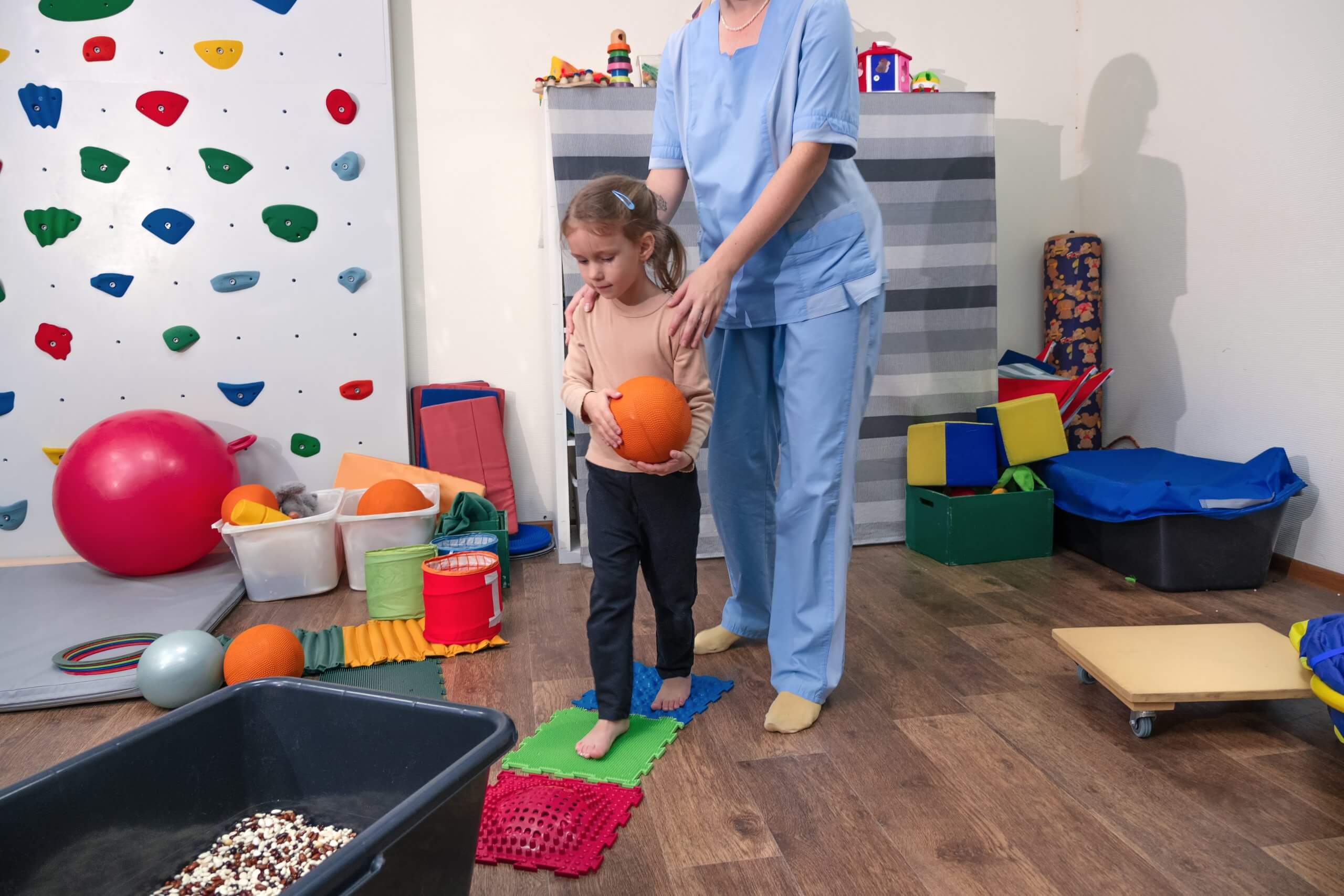
In this episode, two occupational therapists, Emily Bourque and Emily Forthofer and two moms share insights into the broad scope of occupational therapy for children, highlighting how OT supports development beyond handwriting. They discuss personal journeys, practical benefits of OT in different settings, and how families can advocate for their children’s needs.
Key Topics
- Personal journeys into occupational therapy
- The wide scope of OT beyond handwriting
- Benefits of OT in school and home settings
- How OT supports independence and confidence
- Family involvement and advocacy in OT
- Age-specific focuses in pediatric OT
- Signs indicating a need for OT support
- Personal success stories with OT
Emily Woodward (00:03.256)
Today we’re joined by two wonderful occupational therapists, Emily Bourque from the Ground Up OT LLC, and Emily Forthofer from Empowered Minds Therapy. Our goal today is to help families understand that occupational therapy goes far beyond handwriting skills. OT can support children in so many different areas of their lives, whether it’s at home, in the clinic, at school, or out in the community. We’re also excited to have two moms, Kimberley Fasano and Kaitlyn Gorman, joining us to share their personal experiences using OT services with their children, and how OT has helped their kids develop confidence and build skills needed to succeed in all settings. Welcome everyone. We’re so glad you’re here.
Emily Bourque (00:51.269)
Hi, thanks for having me. I’m really excited to be here.
Emily Forthofer (00:56.112)
Thanks for having me too. I’m so excited to talk more about OT.
Kaitlyn Gorman (01:02.914)
Hi everyone, I’m happy to be here.
Kimberley Fasano (01:06.639)
Hi, thanks for having me.
Emily Woodward (01:10.478)
So let’s start today by hearing about how you got into the field of occupational therapy. Emily B, why don’t we start with you? What first inspired you to pursue occupational therapy and what drew you to the profession?
Emily Bourque (01:27.649)
So I initially went into college for physical therapy. My older sister went for occupational therapy, and so I wasn’t too keen on doing the same. Occupational therapy isn’t something that I had even considered at the time. As I learned more about the field during my first year in college, I became enthralled and was fortunate to be accepted as a transfer into UNH’s OT program my sophomore year. I have a younger sister, Katie, who has Down syndrome, and Katie was definitely a driving force and continues to be behind my career choice. She is a force to be reckoned with and has taken the world by storm, showing us and others that her disability does not define her. I’ve learned so much from her, with the biggest lesson being that you never know what someone is truly capable of achieving. Once they achieve that, there’s even more to achieve. The sky is the limit.
Emily Woodward (02:29.164)
Emily F, would you like to chime in there?
Emily Forthofer (02:32.294)
Yeah.
I can remember as far back as middle school and high school, that you know, I think I was a little bit unique in that I knew exactly what I wanted to be, and that was a therapist when I was younger. I think that was really connected to both my personal and my professional ties into the profession. Similar to Emily B, I also have two siblings with disabilities. They both have autism and Muscular dystrophy. I have one older brother and one younger brother. I also have a mom who’s pretty heavily involved in the disability advocacy space. And I grew up with her running in a pediatric clinic as well. So I got to see not only the personal aspect of therapy, but the professional side as well, and it throughout middle school and high school I did some exploration into all of those therapies between OT, PT, speech, and I just absolutely fell in love with OT for its creativity and really its focus on just a person first approach.
Emily Woodward (03:49.826)
That’s great. Thank you so much for sharing some of your personal experiences that led you both to your work with OT. It sounds like you both had really unique reasons for choosing this field. Can you tell us a little bit about where you are in your careers today and what you’re currently doing in the field?
Emily Bourque (04:10.629)
So I have worked in various clinics over the years and now own my own business From the Ground Up OT. I open my own business with the hope to connect with patients and families in a more comprehensive way, offering not only direct treatment with the child, but also support through resources, education, and empowerment for the families.
Emily Forthofer (04:37.661)
Yeah, and similarly to Emily B, I I’ve bounced around a bit between school-based, clinic-based practices, and psych positions as well. And I, you know, I think just what I found as a practitioner is that I didn’t always have, you know, the the freedom to practice in the way that I wanted to in some of those settings, and really kind of started to feel bogged down by some of those productivity standards and politics and just system challenges that were really hard to kind of overcome. So that’s when I kind of took a step back and took a leap of faith and decided to start my my own private practice Empowered Minds Therapy. So now I run a mobile practice that’s really focused on more non-traditional and community based care that really provides a lot of that good wraparound support and education and really meets families and clients where they’re at.
Emily Woodward (05:36.77)
That’s great. I know that when some people hear occupational therapy, they often think of handwriting or fine motor skills. Can you explain what occupational therapy is for families who may not be familiar with it? And what are some other ways OT can support children and families too?
Emily Bourque (05:59.107)
An occupation is any task that we engage in as human beings. For kids, things we consider include these among others. So self-care tasks like brushing their teeth, wiping their bottom, or sleep, fine motor tasks like utensil use, opening containers, or pincer grasp, social and recreational tasks such as that of play, peer interaction, and engagement with leisure activities, daily routine tasks like household chores, safety awareness. Participation in morning and evening routines and community participation. The areas that I find parents to be most surprised that I address with children include functional vision, attention, feeding and eating, impulse control, and that I work with kids as young as babies on gross and fine motor skills, because this is an area both PT and OT can work on.
Emily Forthofer (06:56.158)
In grad school, I think one of my favorite memories from then was when they would always have us practice our elevator pitches. They said, you know, as soon as you get out into the real world as a practitioner, you know, somebody’s gonna ask you what OT is, or they’re gonna make an assumption about what OT is, and they’re just gonna be completely off the base about it just because our scope is is so wide. And you know, I practice my pitch a lot when I was in grad school. And what I always tell my clients and families is that what we do in OT is just helping individuals succeed and become more independent in their everyday life. And this can be offered through a wide range of different areas, whether, you know, like Emily said, that be something like helping a kid with toileting, learning how to dress and undress, any of those self-care work play or education based skills, and as far as my elevator pitch goes, you know, I think focusing a lot on that skill building, problem solving, education and collaboration is where we really get the biggest bang for our buck in OT. I think, especially for pediatrics, many you know, tend to think of fine motor skills as the main area that we address. And sometimes, you know, we get a little bit pigeonholed into that area as practitioners. But in my role today, my practice really focuses on helping children and family build those skills to become more independent. So this could be again something as simple as learning how to put on and take off socks or completing more complex skills like learning how to make a full recipe as well. Really anything that can contribute meaningfully to the client and their family’s lives and goals and future independence is something that we can address and work towards with them.
Emily Woodward (08:57.858)
Thank you so much for kind of breaking it down to what exactly OT is. Emily F, could you also tell us what are some of the advantages to accessing OT services outside of the school setting and what are the benefits of possibly accessing OT in both settings?
Emily Forthofer (09:17.926)
Sure, absolutely. Many of my clients that I see access both OT services at school and then also at home or in outpatient clinics as well. I would definitely say home-based services shift the focus more to a family systems model. So in OT, we’re gonna focus more on those independent living and daily routine goals with a little bit more of that focus on parent collaboration, coaching, and carryover. Whereas in the school you’re gonna see more of a focus on that academic participation and functioning within the school environment. So you know, I would say the school OT is definitely typically more of a structured way to address those skills and accommodations. And they’re definitely gonna follow more of those state-specific guidelines and that IEP team collaboration. Whereas OT in in the home environment and outpatient environment is gonna focus more on those overarching, independent and family-directed goals.
Emily Woodward (10:25.464)
Thank you for that. Kaitlyn, and Kim, I’d love to bring you into the conversation now. Do either of your children receive OT services in both settings, the school setting and at home, or in an outpatient setting? And if so, how have you seen OT support your children at school and at home? And what difference have you seen it make in their day-to-day experience?
Kaitlyn Gorman (10:52.45)
Yeah, so my daughter actually receives in home OT and school based OT. School services for my daughter tend to focus on a few different aspects from fine motor skills, self help skills to sensory supports. The most important being regulation within the school setting. The team has done a really great job taking a deep dive into what her individual needs are from a sensory standpoint, and they have created a sensory plan as well as a plan for ways to help her when she is having a hard time throughout her school day. I read this quote once, and I think it carries a lot of weight and it’s always stuck with my mind in every aspect of my daughter’s life. And that quote is “regulation before expectations.” I feel as for OTs to provide these types of support, it really helps her feel safe, understood, and happy to be going to school. It’s a happy place to be. And from an in-home OT perspective, we focus on so many things. And I think that’s one of the benefits to in-home is that you can really say, you know, this, whatever that may be, has been challenging for us lately. And I’m hoping that we can when we can change gears and work on that. Most recently we have been working on some independent goals with daily living skills and continuing with that regulation support, especially during engagement within hard activities. We’ve seen her confidence grow with the ability to do things on her own recently, such as getting dressed, helping her put her own laundry away, brushing her own teeth. It’s just truly amazing to see her so proud and say, I did it, mom. It’s very cool.
Kimberley Fasano (12:57.525)
So I actually have two kiddos that have both used OT services. Both were in clinic settings and outpatient outside of the school setting because they both have ADHD and one is autistic, but they didn’t really qualify for in school OT. So for my oldest who’s now in high school and has actually graduated from OT he attended sessions in a clinic-based setting where there were all sorts of different apparatus and multiple therapy rooms that could be used for large and fine motor skills. My younger son is in middle school and just started his OT journey with an in-home clinic, and he needs more help with managing his hyperactivity and channeling his movement and sound both in school and out of school.
Both of my sons needed massive help in executive functioning skills and processing emotions in a more productive way than either of them had done in the past. So through OT in both settings, my son and us have as parents have learned tools for how to successfully transition from one activity to another. And we’ve also learned how to identify when the boys might be getting what we’ve learned the term rock brained or stuck in a topic or opinion that they just will not move from. Both boys have also through OT worked on their executive functioning skills to better organize their thoughts and their schoolwork to be more successful at school.
Emily Woodward (14:48.332)
Thank you both for providing that personal perspective for us. Emily B and then Emily F, when you think about OT, what kinds of kids can it help? Are there certain ages or challenges where you might say, “This is where OT could really make a difference?”
Emily Bourque (15:07.779)
So I think all kids can benefit from working on growing developmental skills, but insurance has guidelines for when services are covered. And I encourage parents to reach out to an OT if they have questions about what is going on with their child to see if an evaluation is warranted. I work with children from birth to twenty-one and there are also occupational therapists that work with adults.
Emily Forthofer (15:32.388)
Yeah, I think, you know, as far as OT is concerned, early intervention is definitely key for many of the kiddos that I see. I think even without a formal diagnosis, many kiddos can benefit from OT support and services to just address developmental concerns across areas. And I think as OTs too, we definitely have a really nice lens when it comes to those developmental tracking and milestones and being able to address some of those skills from a more clinical-based perspective.
You know, I also think a lot of the times it’s about finding the right fit when it comes to OT services as well. Just because, you know, you go to one OT first and maybe, you know, they have more of a focus in one area, maybe they just don’t jive well with your kiddo’s personality, doesn’t mean that the next OT might have the same lens or the same approach too. So definitely find, you know, a good fit from a therapist perspective for your kiddo. And then I think, you know, as far as just age ranges too, just because our scope is so big at OT, those areas that we can address kind of shift and change focus as the kiddo gets older, which obviously, you know, it’s not a one size fits all approach. But I would say in my practice, what I kind of see from that zero to three age range is going to focus more on you know, those early developmental milestones and tracking and parent coaching, where you get into the three to five range is gonna focus a little bit more on those underlying skill development and application of those daily living activities and social activities. The five to twelve range will focus a little bit more on those specific areas of challenges and how it’s impacting their everyday life. And then as we get into the 12 to 18 and 18 up range, it starts to more focus on that psychoeducation, carryover supports, and then vocational skills and development as well to really start focusing on more of those work-based occupations and skills that the kids are gonna need for their future as they get older.
Emily Woodward (17:53.602)
Thank you so much for kind of outlining the different ages and what your focuses generally are. Emily B and then Emily F, What are some signs in children that indicate a possible need for OT? And when should families seek professional support?
Emily Bourque (18:13.315)
So if a child is struggling and seems like things are really hard for them, it’s worth considering occupational therapy. I believe very strongly in the phrase “all kids do well if they can,” which is from Dr. Ross Green. And there’s so many things that could be impacting a child’s ability to engage, for instance, primitive reflexes that somebody might not consider as another healthcare provider.
Emily Forthofer (18:42.065)
Yeah, as far as, you know, looking at getting services for OT, I definitely think, you know, if you have a kiddo that is not meeting those developmental milestones or is maybe starting to fall behind on some of those age-based expectations, or if you’re just generally noticing challenges within any of those areas that we talked about before, whether it be social interactions, play-based skills, emotional and sensory regulation, self-help and daily living skills. Fine motor, attention, flexibility, any of those things, if you’re noticing challenges, an OT evaluation is the first step. So, you know, you can go in, get an OT evaluation, see, you know, if they’re meeting those age-based expectations or if they are starting to have some challenges arising and really talk through that with the OT who does the evaluation to determine those areas of strengths and challenges and see if OT is a right fit. And you know, just because you do an evaluation doesn’t mean that you always have to follow through with the recommendations as well for service delivery too. But it just at least gives you kind of this profile and picture of what what’s going on and some general recommendations where OT can support. And then that way you have the information to be able to make an informed decision from there of what could best help your child for the future.
Emily Woodward (20:12.856)
Kaitlin and Kim, could you tell us what it was that kind of first motivated you to pursue OT for your children? Was there something you noticed while they were playing or learning or trying to do certain everyday activities that made you think they might need some additional support?
Kaitlyn Gorman (20:30.916)
So our first intro to OT was actually when she was just an infant. My daughter was born with a rare genetic condition that has caused significant global delay. And when we started OT when she was enrolled into early intervention at about three months until she was three, during those times we worked on everything from vision to feeding therapy to fine and gross motor skills. At three, she was then transferred to the school district, but we also continued to attend outpatient OT for additional supports related to her disability.
Kimberley Fasano (21:13.527)
So we were a little bit later. My oldest was in fourth and fifth grade during COVID and remote learning hybrid times, and it was a constant daily struggle for us. He was constantly going between distraction and hyper focus, and I finally kind of said enough was enough and I went to our primary care in the school and had him evaluated. And from there he was diagnosed with ADHD at the end of fifth grade. I was talking to a friend of mine whose son had also been diagnosed with ADHD, and she recommended that I look into OT because it had made such a difference to her son. So I was finally able to get him into his clinic based setting at the beginning of his sixth grade year, and we started working on actionable goals and he was making some progress, but it wasn’t awesome, but then he was diagnosed with autism spectrum disorder level one when he was in seventh grade, and with our OT team, we were able to regroup, tailor his services to better support him from the autism diagnosis, and that changed everything. Within a year and a half of his autism diagnosis, he graduated from OT. So that was a huge thing. He struggled to focus, write complete sentences, move from topic to topic, and now he’s in honor level high school classes. He’s vice president of his high school robotics team, taking driver’s ed.
And he’s even looking at colleges. So it really made such a difference for him in what really was a short amount of time. For my younger son, he was diagnosed with ADHD when he was in fourth grade, when no one could really explain away his wiggliness or his boyness anymore. It was becoming a problem. He had never really exhibited attention issues and was a fairly good student. So he kind of flew under the radar with that. but it just became too much. And last year when he was in seventh grade, he really started struggling with school, with his executive functioning, and was becoming really hard to deal with at home in managing his emotions and processing his feelings a lot. He would do what we called a shutdown, he would get so mad at us, for asking him to do something or questioning an action that he made or asking about schoolwork that he was missing and he wouldn’t engage with anyone and he was just unable to process his emotions in a productive way. And it became so stressful watching him flounder both at school and home. And I knew that it was time to get him help. But I felt that bringing him to a clinic like environment like I had for my older son would be too much.
Those big climbing apparatus and everything else would be too much of a distraction for him to actually get the work done. So I started looking at alternatives and that’s when I found an in-home OT service that could help him really stay focused in where the problems were lying, which was in school and in home.
And it could also help the rest of the family work together to better support him in a more organic way than him coming out after his session and the therapist telling us what we need to work on. We really work together with our OT on that one. And for instance, just the other day, I was noticing, now that we’re back at school, that he was falling into some of his lack of organizational habits, and so I mentioned that to his therapist before his session. And together they went through his backpack, reorganized him, started on his homework that he had been putting off for four days, all while working on his handwriting and better spacing out his words in his writing.
Kimberley Fasano (25:50.767)
So that was huge. And I’ve noticed through all of this, he’s better able to process his emotions when he’s angry. What would have taken hours in a shutdown is now considerably less time. But I’ve also learned to better self-regulate myself when I get angry in the situations that we’re in, and to better approach him with these situations when we’re at home.
We’re better able to talk through what our feelings are in the moment and how we can work together to get the outcome that works best for everybody in our family.
Emily Woodward (26:29.602)
Thank you so much, Kimberley and Kaitlyn, for those really personal perspectives about how OET has helped your families. Emily B and Emily F, can you talk a little bit about how you involve and support caregivers alongside the children that you are working with?
Emily Bourque (26:47.746)
Sure. So I’m in the outpatient setting and I actually have parents present in every session. I think this is of utmost importance so that parents can observe and understand and apply concepts outside of therapy, because I’m not always able to interact with them in the home setting directly, unless typically it might happen via Zoom or an in-home visit.
I also find this allows me to offer parents in-the-moment education and guidance as things come up during the session. And all parents and families are offered ways to work on skills at home within their daily routine. As often things like a traditional home exercise program just is are not followed because there’s no time.
Emily Forthofer (27:35.366)
Yeah, I love this question because, you know, this is really how I’ve kind of shifted my practice and really focused heavily on that caregiver involvement and support. You know, from the services that I provide to my families from the initial intake to the evaluation and sessions and discharge, I’m constantly collaborating with the caregivers and also the own child as well on their goals, the progress and skill developments. I always do a really thorough at least an hour parent interview to really gather that occupational profile and do a deep dive into that history of, you know, what makes them tick and who they are as a person and who they are as a family unit, to really make sure that I’m addressing those concerns that are the utmost priority to the family and the client.
And then something that I’ve really incorporated into my practice a lot is those parent education sessions to really shift focus to that wraparound care and also just collaborating with other team members, whether that be PCPs, other school providers that they see, their teachers, other family members, and really providing those supports, whether it be parent coaching, advocacy, helping develop, you know, toileting programs at homes, or even just phone calls to go over, you know, a tricky situation that happened earlier in the week. I think, you know, OTs are really uniquely positioned to provide those consultative services to just outside of that just direct service model. And it’s not something that’s always implemented into practice as well, but is definitely an area that’s starting to come up more in the world of OT because I always tell my parents and get a little giggle out of it from them every time that, you know, I can see your kid for one hour a week and yes, I love my job and I really value what OTs do. But at the end of the day, if you know, there’s no carryover and support on the parent side of it, we’re not gonna see as much progress happen as quickly. So when parents are really doing their homework and clients are doing their homework, we’re gonna see the biggest bang, bang for our buck and the greatest success overall with those skills that we’re working on.
Emily Woodward (29:58.67)
That’s great. Can you tell us a little bit more about how families can be involved and help carry over the skills that you work on with OT into their everyday routines and activities? Emily B, starting with you.
Emily Bourque (30:17.067)
Yeah, so the families that are my favorite to work with and those that definitely make the most progress are those that are actively engaged and involved in their child’s treatment plan, those that are willing to offer feedback and approach care from a collaborative viewpoint, working together to support their child as best as we can as a team. And the ones that are willing to share if they have another idea come up during a treatment session or willing to speak up if something looks different at home from what I perceive based on a conversation.
I definitely encourage families to dream big, which is often something that’s discouraged by our society. And I have seen such great strides in kids by presuming that competence and assuming they have the ability to learn skills versus the latter. Independence is something that we as adults, or at least me as an adult, take for granted until something happens. And I’ve come to realize how much our positive self-concept, confidence, and the way that we view the world is impacted by what we can do.
Emily Forthofer (31:18.246)
Yeah, I think family involvement should always be collaborative and holistic, especially you know, when we’re working on those skills, especially in the home environment, that are really personal and family dynamic focused. I think, you know, you should always feel comfortable reaching out to your clinician and other providers and just talking about those family concerns and those dynamics and, you know, some of those challenges you’re seeing at home or in other settings with your kiddo. Because at the end of the day, the more information that we have on our end as a clinician, the better we’re able to help you and you know, definitely being an active participant in those sessions, asking questions, collaborating with your therapists, and really having that side-by-side model so you can, you know, watch the skill be addressed in session and then also be comfortable with being able to do it and implement it yourself as well is something that’s really important. And I also think something that you know, OTs are really great at doing too for kids, but then, you know, also for parents is really accommodating to those learning styles. So, you know, we do this all the time for the clients that we work with, but, you know, parents should keep in mind too that, you know, if they have, you know, specific needs or accommodations or specific learning styles that work best for them, don’t be afraid to speak up and let your clinician know your preferences so they can better, better help you to help your kiddo as well and then like I said before, taking advantage of those consultative services that you think, you know, both you and your kiddo would benefit from, whether that be, you know, the advocacy or a quick phone call or going over a program a little bit more in depth outside of session to really help with that skill development outside of those direct services. And I think that’s also kind of an area sometimes that, you know, may get neglected in certain settings just because of high productivity standards with clinicians as well, but is definitely essential to our practice and something that we love to do and are always willing to help families with.
Emily Woodward (33:31.084)
I know a lot of families sometimes are told to kind of wait and see and that they’ll grow out of it. How can families effectively advocate for their child and ask their pediatrician about occupational therapy and what are some signs or concerns that families should bring up and when is it appropriate to ask for an OT evaluation?
Emily Bourque (33:55.7)
In the state of New Hampshire, occupational is con occupational therapy is considered direct access and at times can be accessed without a referral depending on your insurance. But I always encourage families to connect with their pediatricians when something doesn’t seem quite right. Most pediatricians are comfortable with referring for an occupational therapy evaluation to start to gain further understanding of where a child is at in comparison to same-age peers and what could be contributing to the challenges faced at home.
Emily Forthofer (34:27.517)
Like I said before, I think any of that information you can share with your PCP is gonna be definitely important. The more information that they have, the better. So they can support you to be able to refer you to those correct practices and clinicians to get your kiddo the services that they need. Definitely pro you know, provide and share any of those data, whether it be from school at home or reports, any developmental checklists, even just videos of your kiddo. Maybe they’re, you know, have showing a specific skill challenge or maybe you’re worried about some regulation concerns, any videos, evaluations, reports, any of those things that you can share with your PCP will be helpful to help them refer you to the right person. And then I think as a parent too, just advocating for an OT evaluation at the minimum with your PCP is something that’s really important. You know, just even if your kiddo doesn’t have a formal diagnosis, an evaluation is the first step to see, you know, are they meeting age expectations or are they presenting with some challenges that could be addressed?
Personally and professionally, I’ve had many clients that have experienced barriers to accessing OT services for their kiddos. you know, I think primarily because not all PCPs understand the full scope of what OT can provide and what we can address. Obviously, you know, certain OTs will have their different niches in in areas, and definitely one of my niches in OT is more mental health and community health focused.
Emily Forthofer (36:11.396)
Of the times I would find that PCPs were refer referring clients to behavioral health or using more of a wait and see method, which you know would result in delayed access to care or insurance not covering those services, even when New Hampshire is a direct access state. Because unfortunately, the reality with insurance is that you know, if your kiddo needs those services and even if they would benefit if there is not, you know, a PCP script or a referral insurance, you know, may not cover those services, which, you know, that can lead to a big financial burden on families and clients as well. This was definitely something that I saw personally impact my older brother Ryan as well. I, you know, very clearly remember my mom talking to me about how, you know, he was pushing six, seven, eight years old. And year after year she would go to the PCP and just say, you know, I’m just worried a little bit about his development. I’m seeing some of these things and she was kind of brushed off and told, he’s a boy, he’ll grow out of it, or it’ll be okay, and then a couple of years later he was diagnosed with both myotonic muscular dystrophy and autism and then, you know, was able to get access to all of these services. But you know, I think the big concern was he missed out on some of those really, really important early intervention years, and I think, you know, as a parent, just trusting your gut and advocating as much as you can to your PCP if you know you do have concerns is something that you can do and definitely push for.
Kimberley Fasano (38:02.107)
So I just wanted to add in here, as Emily F had had said, I was one of those parents that was given for both my boys this wait and see approach, or the well, no. It’s okay as a parent to keep pushing your primary care physician and the school if you see something at home that you don’t think is right. You see things that they’re not gonna see in a 10-minute or half hour exam room visit or even in the classroom. It wasn’t until COVID where my oldest son’s teacher and I were actually in the same place at the same time, in the same setting where we could say to each other, yeah, this isn’t right. He was fifth grade at that point.
I had I brought him to early intervention screenings. I had asked teachers, I had filled out all of the forms for ADHD and executive functioning and all of those things. I had done that time and time and time again, and nobody was listening to me. And so it really helped that I kept pushing for him because I knew in my gut that there was something that needed to be done. and I would also reiterate the taking the videos of things that concern you.
Emily Woodward (39:52.238)
That’s excellent. Thank you so much for sharing all that. Emily D, can you share a memorable story if you have one or an experience that really highlights the positive impact that OT can have on a child or family?
Emily Bourque (40:09.459)
Yeah, so I had a child who I saw from ages four to nine. She actually just discharged. And initially following a cardiac event, she had become really fearful of medical providers. So our first focus was on that, as well as overall nervous system regulation. And throughout her plan of care, we progressed through addressing fine motor skills, which impacted her ability to cut.
Functional vision to be able to engage with letter and shape identification, body awareness, which impacted her ability to wipe herself after a bowel movement, impulse control skills to inhibit her automatic reaction and make intentional safe decisions, and ability to divide attention so she could play outside and listen to what her siblings were doing in a distance without losing her balance in whatever she was doing at that time. Social skills were also worked on, because this impacted her ability to engage with peers and other just other adults in like the grocery store, for example. And she was able to accomplish so, so much. And though there were definitely hard days, seeing where she’s at now, a fully functioning nine year old who is confident, poised, and a go getter makes it all worth it. And I am so proud of the young lady that she has become.
Emily Forthofer (41:29.008)
Yeah, I have a client who is a teenager with spina bifida and is wheelchair bound, who, you know, initially when we started OT definitely focused in the home environment on those activities of daily living and really just becoming more independent in those daily routines. But something that I don’t think I talked about initially that I also do in my practice and also do in my personal life is horseback riding.
I’ve found a way to incorporate my personal and professional passions together and provide equine therapy as well as those in home based services. So something that we did with this client is we were having some difficulty just getting some of that momentum going and some of that motivation to participate in therapy in the home environment. So we kind of shifted gears to equine therapy and were able to, you know, get this client who
who is wheelchair bound and you know, doesn’t ever really get to access any of those typical things that you know, kids get a chance to when they’re younger, like playgrounds and animals and all those things. We were able to get this client up on a horse. And not only was, you know, she on the horse, but she started riding independently as well. And this started to really build the foundation for her confidence and in those underlying fine and gross motor skills. So we could then re-shift focus back into the home environment, where of course she was still talking about the horses and how much fun she had during those sessions, but then shift focus now to okay, like if I can ride a horse, I can also graduate from high school, I can also get a job, I can manage transportation independently. And now we’re really starting to work on all those bigger life skills that are really gonna allow that client to gain bigger and better access to her world as she gets older. And so that was, you know, just such a holistic, holistic experience that happened with this client. And just, you know, one of the main reasons why I love OT is to just see how not only did we develop all these great skills, but we really, really targeted and saw her grow from that mental health standpoint as well too.
Emily Woodward (44:03.128)
Thank you for sharing that. That sounds like a lot of fun, the equine therapy. And it’s really great how OT can incorporate and really use some creativity when working with clients. As we wrap up, are there any final thoughts or words of encouragement you’d like to share with families who are considering OT for their child or wondering if OT may be the right thing for them?
Emily Bourque (44:29.607)
Yeah, I think never feeling bad about bringing up questions or concerns to your clinician. We definitely want to help and you’re not alone and advocacy can feel like both a constant fight and very isolating, but there’s so many providers, nonprofits, and other people willing to support you in any way that they can. And it definitely takes a village and thank you for everything you’re doing to support the next generation. Parenting is hard and parenting a child with special needs is even more challenging at times, but the work you’re doing is so important in setting your child up and our world up for a bright future.
Emily Forthofer (45:12.102)
Yeah, I think, you know, every OT and every practice offers something unique and different. So, you know, what works for one client or one kiddo or family may not work for your family or your kiddo as well. And that’s totally okay. Definitely asking those hard questions, digging a little bit deeper and figuring out which approach aligns best with your values as a parent is something that’s really important when kind of entering into the therapy world. And then also, you know, progress is gonna come from that carryover and collaboration. So really take advantage of those learning opportunities and implementing those recommendations and using those consultative services to really support the whole system and the whole child rather than just focusing on fixing certain skills. Definitely don’t ever be afraid to ask your clinician about certain goals or skills for your child, or even just referrals to other providers or different types of practices as well. Odds are, you know, if you have a question, we can help you address it. And if not, we can definitely connect you with someone who can.
Kaitlyn Gorman (46:25.666)
I just wanted to chime in real quickly and mention a really valuable resource that has helped our family. This is called the Maneuvering the Maze Guide. It’s published by New Hampshire Family Voices and it has just recently been updated actually. It’s a comprehensive resource for families and professionals supporting children with special health care needs, chronic conditions, and disabilities.
Kimberley Fasano (46:50.024)
Yes, the Maneuvering the Maze is an awesome resource. That’s actually how I found our current OT for my younger son. So I highly recommend going to the New Hampshire Family Voices website and downloading that or even requesting a printed copy.
Emily Woodward (47:10.104)
Thank you so much for mentioning that valuable resource, and we can provide a link to download that or to access that rather as well. Thank you, Emily Burke, Emily Forthover, Caitlin Gorman, and Kimberly Fasano so much today for sharing your insights and experiences with us today. OT is such a valuable resource for the families we work with, and we truly appreciate you taking the time to join us. We hope families listening leave with a better understanding of OT and the many ways that it can support their child’s growth, development and everyday success, whether it’s at home, at school, or out in the community.
Emily Bourque (47:47.412)
Thank you. It was great chatting with you all.
Emily Forthofer (47:51.526)
Thank you so much for having me today, and I just love the work that you guys are doing. so keep at it.
Kaitlyn Gorman (48:02.008)
Thank you for having me today. We love our OTs.
Kimberley Fasano (48:06.858)
Yes, thank you so much for having us today.